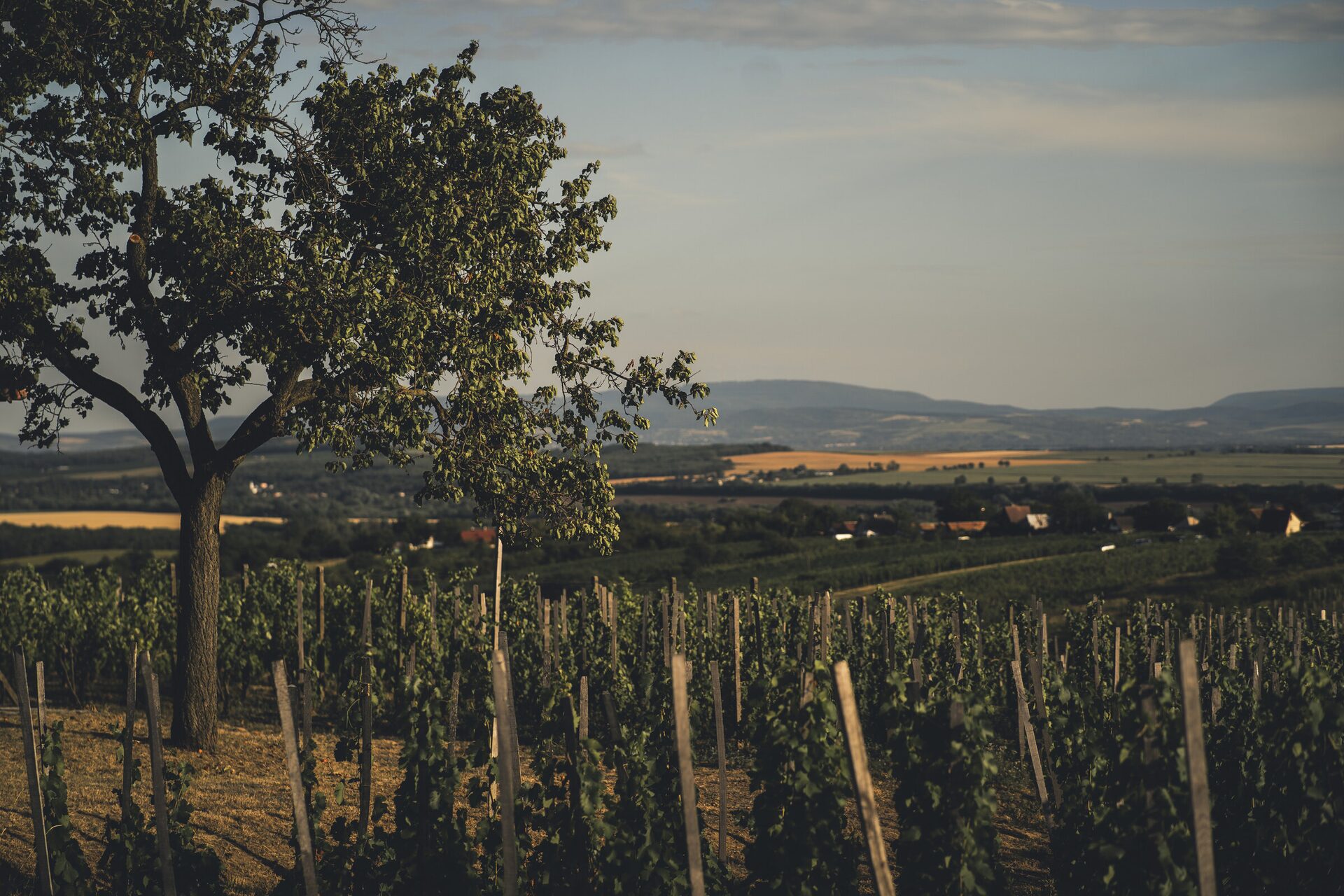
6.5 ha on the Szőlővölgy Slopes
The Terroir of Strekov
A Landscape Shaped by Water, Sediment and Centuries of Viticulture
Strekov’s terroir is far more complex than a combination of loess, clay and warm southern slopes. Its landscape has been shaped over thousands—and even millions—of years by geological processes, rivers, wetlands and the gradual accumulation of sediment.
The Paríž Stream and Paríž Marshes are integral to that history. They reveal the meeting of two contrasting environments: drier, elevated vineyard slopes and wetter river floodplains.
The Geological History of Strekov
Strekov, historically known as Kürt, is situated in the Southern Slovakia wine-growing region, at the meeting point of the Danubian Lowland and the Hron Uplands. Over millions of years, geological processes, river systems and sediment deposition have shaped its landscape.
The region’s geological foundations comprise layers of clay, sand, gravel and fine sediments, in places overlain by loess during the Quaternary period. This has created a varied mosaic of soils, including chernozems, brown earths and alluvial soils.
The Paríž Marshes: Remnants of a Historic Wetland Landscape
The Paríž Stream is inseparable from the Strekov landscape. Over centuries, it has shaped the valley and created conditions for an extensive wetland system. The Paríž Marshes extend along its valley between Strekov, Nová Vieska, Gbelce and the Svodín area. Preserved to this day, they are remnants of a historic wetland landscape of open water, floodplain vegetation and rich biodiversity. The site became a national nature reserve in 1966, was designated a Ramsar Wetland of International Importance in 1990, and became part of a wider protected bird area of approximately 377 hectares in 2008.
The presence of water creates a striking contrast between the humid valley floor and the warm, sun-exposed slopes. The wetlands may influence local humidity and morning mist, while the elevated vineyard sites provide favourable conditions for grape ripening.
Centuries of Viticulture
Viticulture has been part of Strekov for centuries. Generations of local growers have worked with its sunny slopes, diverse soils and distinctive climate.
To us, terroir is more than the soil in which our vines grow. It is the product of a long natural and cultural history—a meeting of sedimentary geology, water, sunshine, biodiversity and centuries of winegrowing tradition. We strive to preserve this identity and allow it to find its natural expression in our wines.