About the winery
It All Began
with a Wine from Strekov
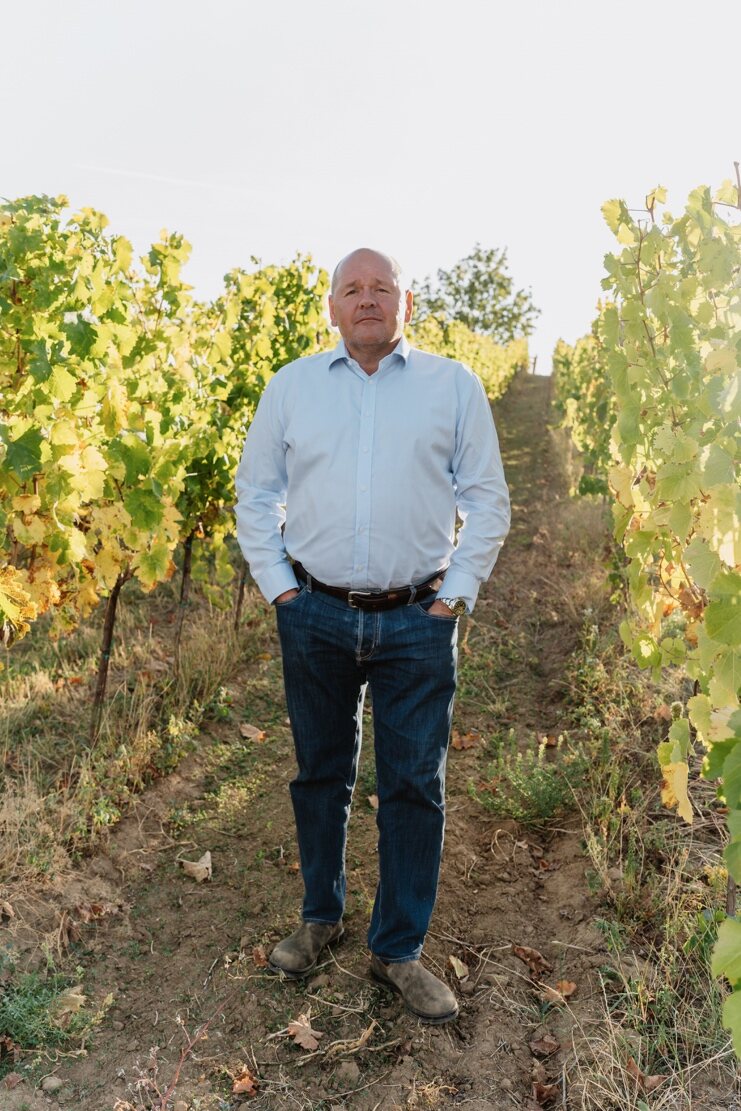
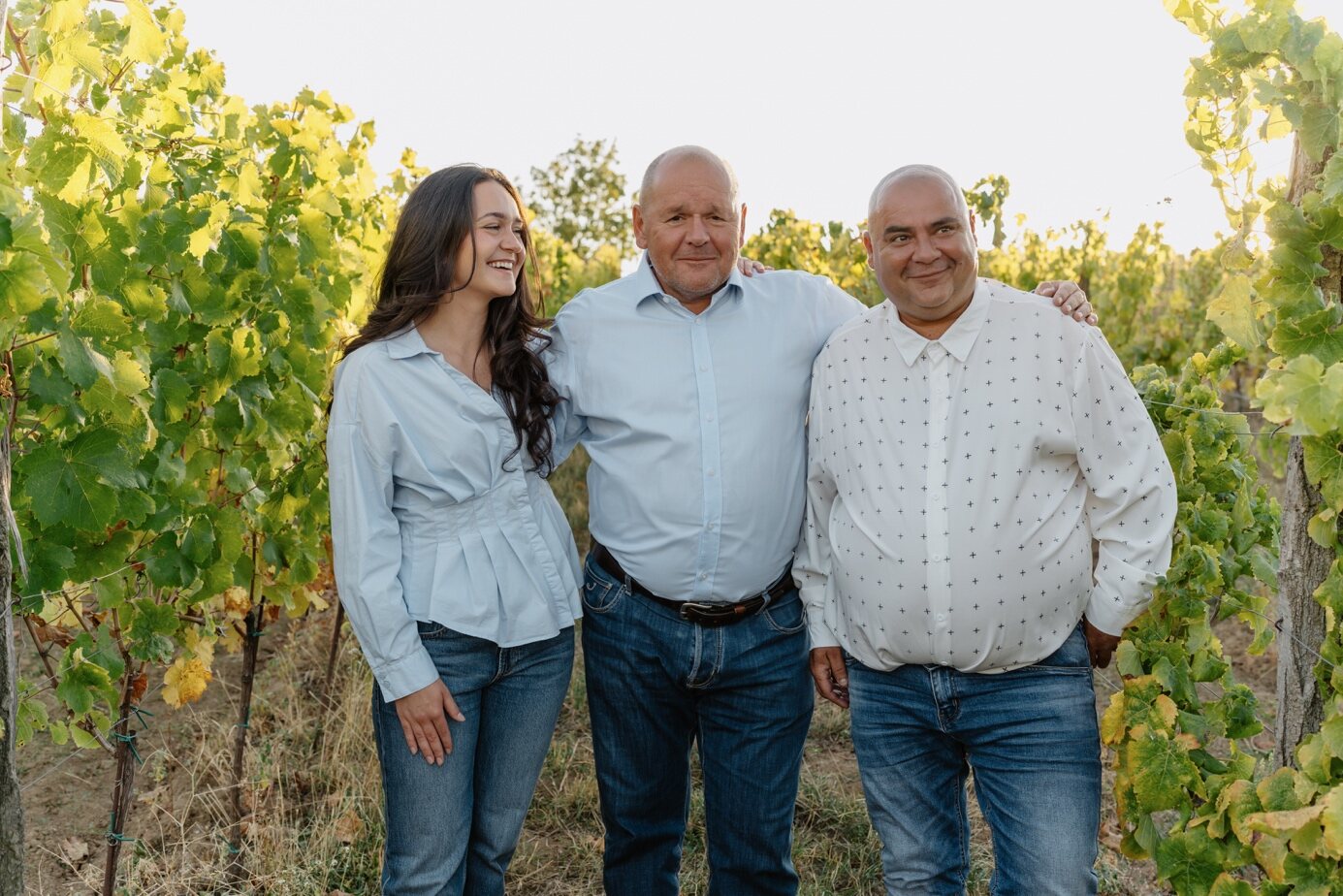
The story of Emma Winery begins with Róbert Hrotkó, whose passion for wine eventually led him to the vineyards of Strekov.
Although he had long been interested in wine, his introduction to natural winemaking came more than 15 years ago, when he discovered a wine from Strekov. Captivated by its distinctive character, authenticity, and vibrant expression, he began exploring the philosophy behind natural wine.
A turning point came when he met local winemaker Tibor Melecsky, who introduced him to the art of traditional winemaking. From tending the vines and harvesting grapes to understanding the rhythms of the vineyard, Róbert developed a deeper appreciation for a process guided by nature. Inspired by this experience, he purchased a small vineyard and, with Tibor’s guidance, began producing his own wine using traditional, low-intervention methods. What started as a personal passion gradually evolved into the foundation of Emma Winery.
Our Vineyards Grow. Our
Philosophy Remains.
Róbert remained committed to natural winemaking after Tibor’s sudden passing. Tibor laid the foundations of the philosophy that continues to guide us today.
Since 2020, Emma Winery has gradually grown to 6.5 hectares. Our winemaker, Július Szabó, has cared for the vines and overseen the cellar from the beginning. Thanks to him, Tibor’s invaluable knowledge has been preserved and continues to evolve. Together, Július and Róbert refine our winemaking practices, bringing precision and consistency while improving the quality of our wines year after year.
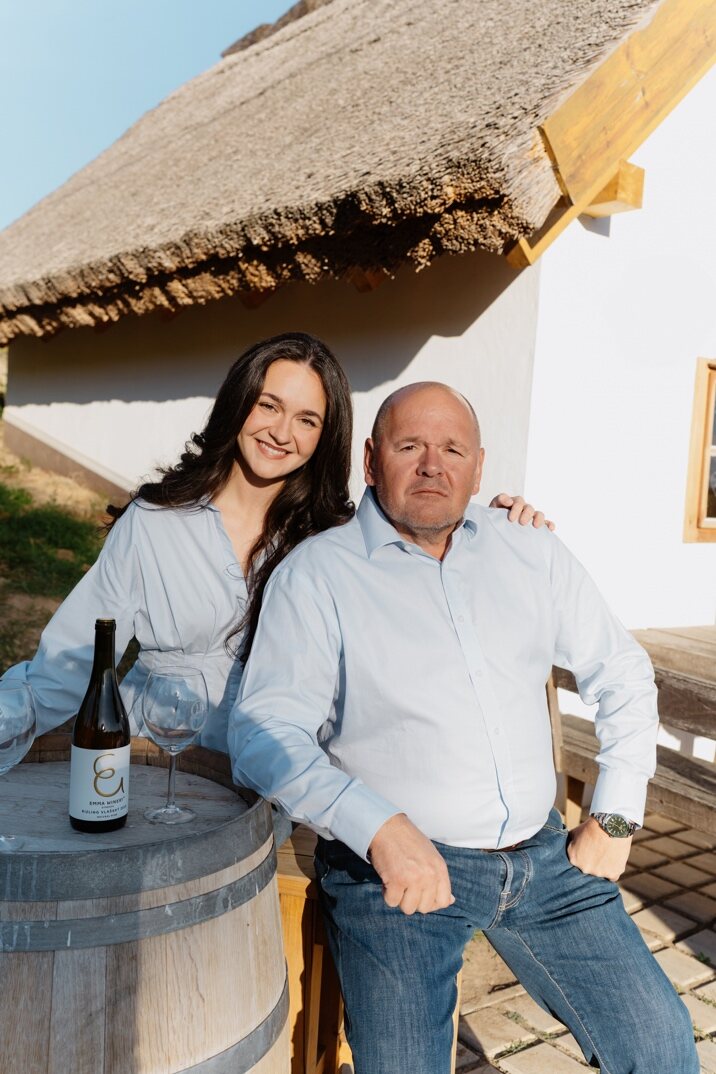
Since June 2026, Róbert’s daughter Emma has worked alongside him, leading sales and brand development.
In our vineyards, we follow environmentally responsible, sustainable viticultural practices. Our aim is to preserve long-term soil fertility and biological activity, encourage biodiversity and protect the natural life of the vineyard.
Crafting authentic wine using traditional methods is our passion, and we believe it is a meaningful, sustainable way forward. We hope you will come to love our wines as much as we do.
With love, Emma, Róbert and Július.
Letting Nature
Lead
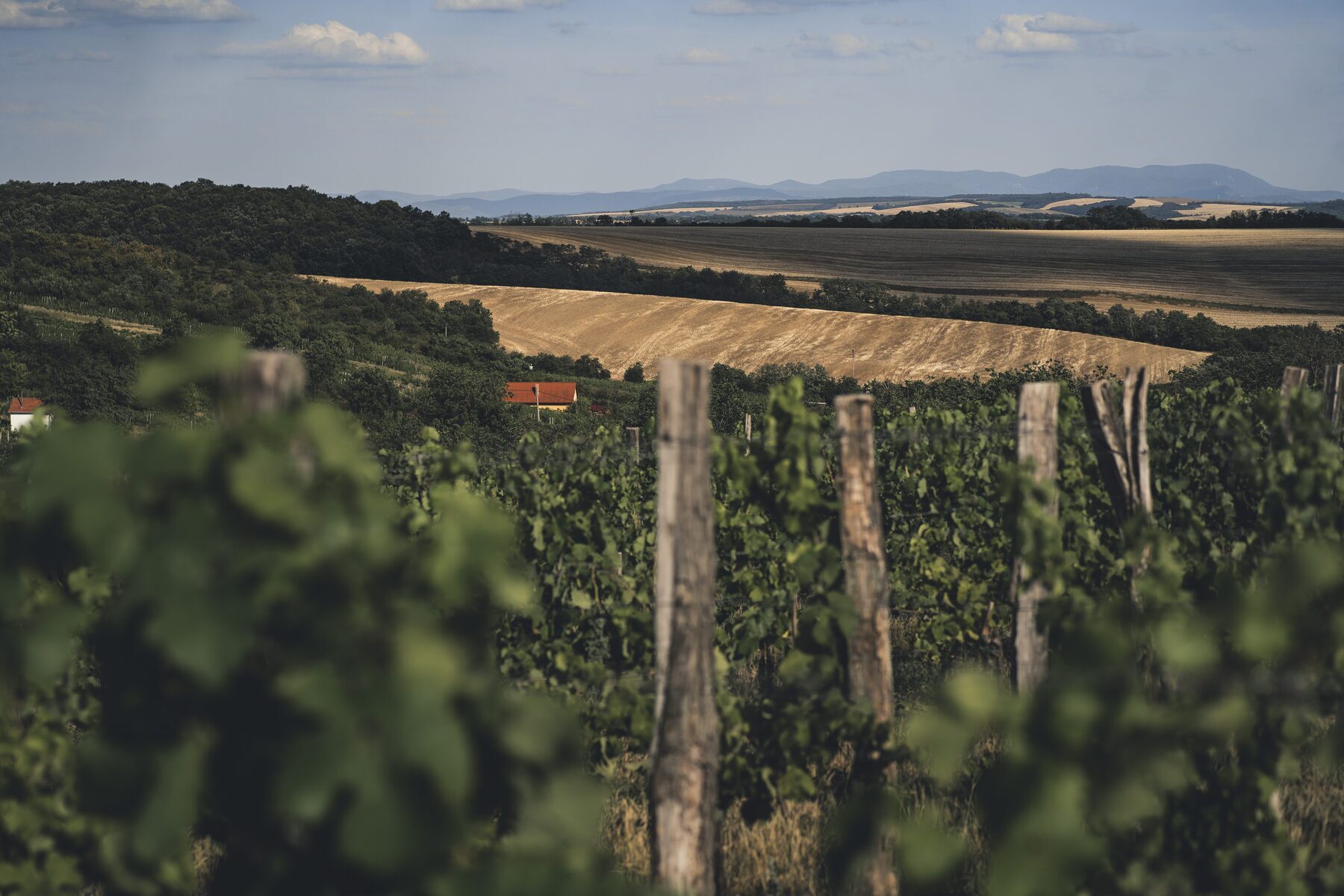
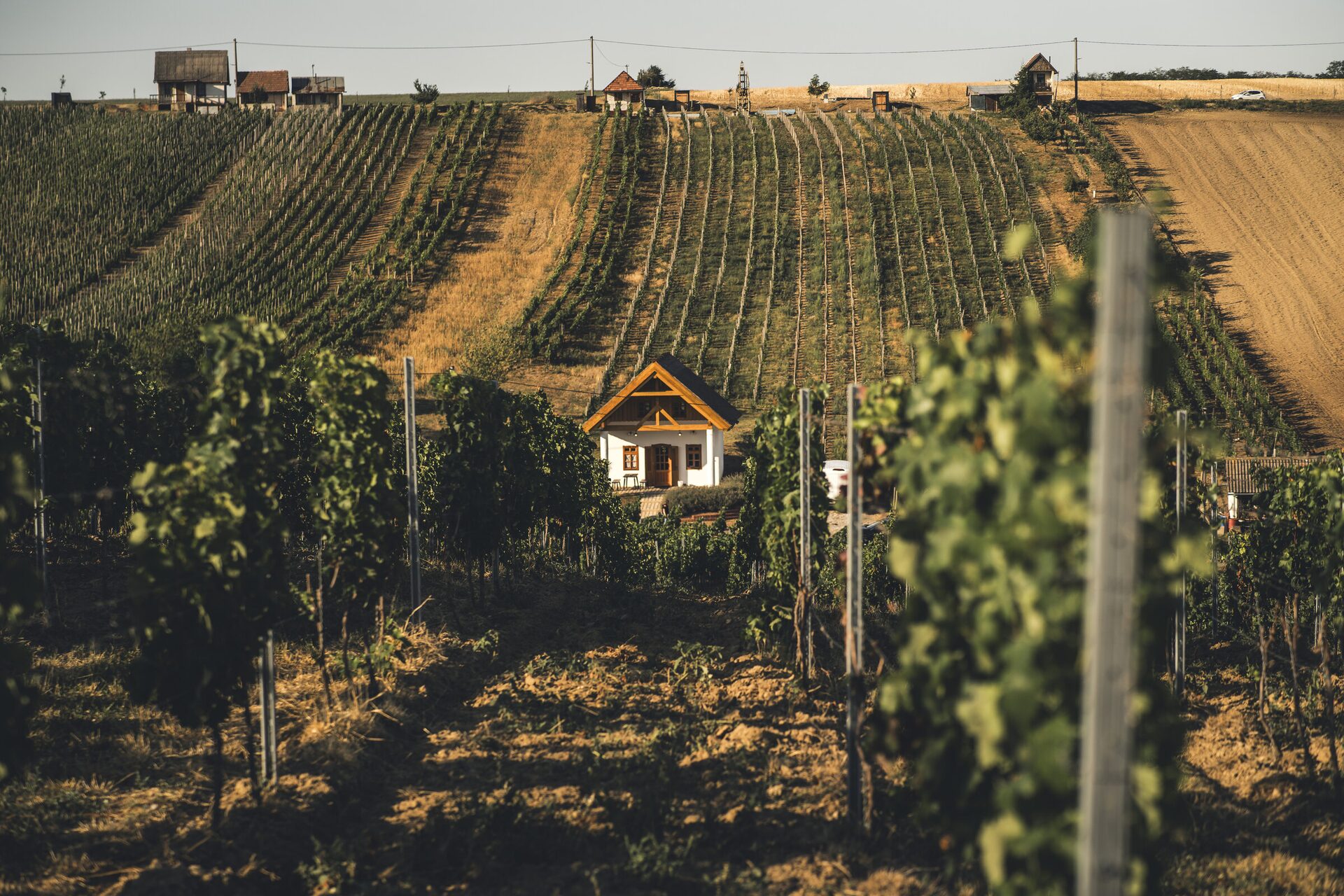
Across 6.5 hectares, we grow traditional Central European grape varieties suited to the Strekov winegrowing district, producing approximately 13,000 bottles a year. Our vineyards occupy the sun-drenched, south-west-facing slopes of Szőlővölgy, where we practise low-intervention viticulture without synthetic fertilisers or herbicides.
Our Winemaking Process
Our wines are made using traditional, low-intervention methods. Follow their journey from hand-harvested grapes to the quiet maturation of the cellar.
The grape harvest
We select only healthy, ripe bunches from deliberately restricted yields, allowing the fruit to develop its full character. After hand harvesting, we destem the grapes to produce a must containing juice, pulp, skins and pips.
Spontaneous, on the skins
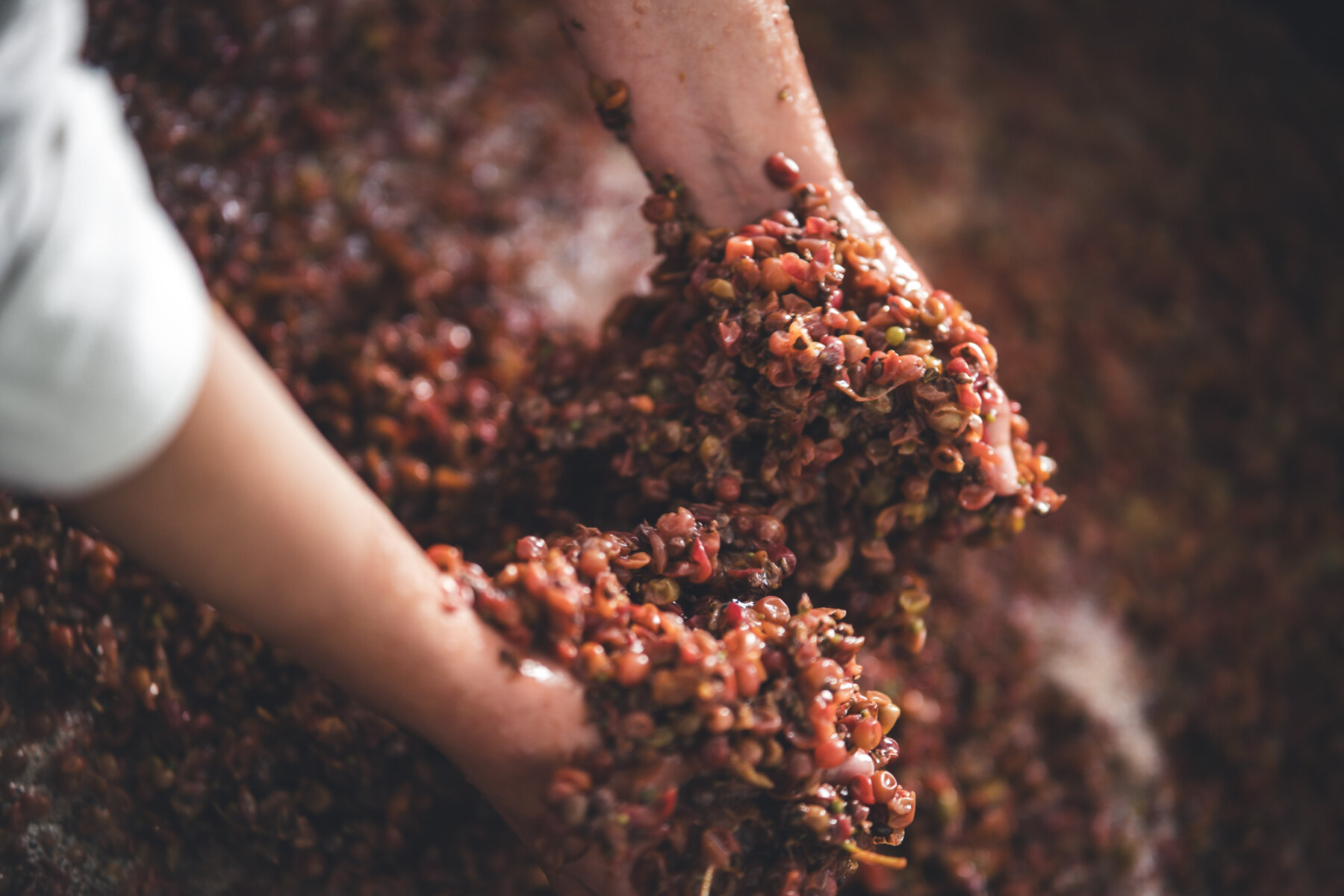
Fermentation takes place at approximately 18 °C in covered vats to keep fruit flies out and reduce the risk of unwanted microbial activity and volatile acidity. As carbon dioxide is released during alcoholic fermentation, the grape skins, pips and other solids rise to the surface, forming a cap of grape skins (the pomace cap).
Pigeage
During spontaneous fermentation, we punch down the cap (pigeage) two to three times a day. This encourages the gentle extraction of colour, tannins and aromatic compounds from the skins while helping maintain an even fermentation temperature. Our white grapes undergo 10–14 days of skin contact; red grapes remain on their skins for up to 21 days.
Barrel Ageing
After separating the wine from the solids, we transfer the free-run wine by gravity into acacia or oak barrels. There it gradually develops depth and structure through gentle oxygen exchange. Barrel ageing lasts 12–24 months. The wine clarifies naturally as fine lees settle to the bottom; we rack it off the lees before bottling.
Bottling
Once bottled under Portuguese cork, the wine continues to evolve and mature. We neither filter nor fine our wines, so a natural sediment may form.
Nothing added, nothing taken away
Vibrant, unfiltered and unfined wines that express both the grapes and their place of origin.